Showing posts with label plexus. Show all posts

Friday, July 19, 2013

The NEW DANGER of NSAIDS (Non-steroidal anti-inflammatory drugs)

Minor Pain Reliever, MAJOR Side Effects


The most common run-to medication of society today for most minor to moderate aches and pains are the group of medications called NSAIDs or Non-Steroidal Anti-Inflammatory Drugs. Over the years, these group of pain killers were used and recommended as the option for managing chronic pain and discomfort, as opposed to putting patients on long-term steroids. 

Part of the package of taking NSAIDS had always been the MAJOR side-effects that accompany the drug family. Many doctors already exercise caution when considering them for the relief of chronic pain because these drugs are also known to increase the risk of ulcers and serious bleeding in the stomach and gastrointestinal tract. 

A new study, however, shows that NSAIDs increase the risk of heart attack. Those who have had a previous cardiovascular episode, especially, may DOUBLE their risk of having another episode of myocardial infarction or a cardiac arrest if they are on NSAIDs therapy.

There had been two new studies that add to the growing evidence that increased cardiac risk from Non-Steroidal Anti-Inflammatory Drugs (NSAIDs) is NOT limited to the Cox-2 agents.

The first study, published in the British Medical Journal, studied over 9000 patients who had suffered heart attacks, and examined their usage of NSAIDS. They found that the risk of heart attack was INCREASED for patients who were taking NSAIDs by as much as 20 - 50%! In this study, the association with a higher risk of heart attack was especially significant for ibuprofen (Motrin, Advil), Diclofenac (Voltaren, Cataflam), and rofecoxib (Vioxx) - but there was at least a trend toward increased risk for all NSAIDs.

The second study was reported at the 2005 meetings of the European League Against Rheumatism scientific meetings in Vienna, Austria. Investigators reported similar findings in the largest study of NSAIDs reported so far - tracking over 1 million patients with arthritis treated with NSAIDs.


Sources:

http://heartdisease.about.com/od/reducingcardiacrisk/a/NSAIDS.htm
http://www.nydailynews.com/life-style/health/high-doses-common-pain-drugs-heart-attack-study-article-1.1358645
http://www.webmd.com/heart/news/20120910/common-painkillers-risky-after-heart-attack

AN ALTERNATIVE PATH:

It is an amazing blessing to be able to introduce to you the Plexus Fast Relief System for pain management as an alternative real solution to pain & discomfort. The all-natural ingredients in the Fast Relief system are all powerful & healthy anti-inflammatories from nature and are made available for anyone who need help with Chronic pain management today. The all-natural ingredients in this system DO NOT HAVE ANY OF THE SIDE EFFECTS that other modern pharmacological approaches have. 


Please visit this link to learn more about the Plexus Fast Relief System.

Friday, June 28, 2013

Looking Past Joint Pain

Looking beyond joint pain

Most of us oftentimes dwell on the problem of pain in our bodies. Wherever and whenever we feel a certain degree of discomfort, we tend to concentrate on that particular problem and attempt to deal with it in a focused, microscopic way. 

Today's modern medical intervention for pain is also zone-specific to where the discomfort is felt. When we begin to feel pain on our hips, attention would be geared to developing a pharmacological approach to relieving that particular pain. Anti-inflammatories and other pain medications will then become a part of life when joints begin to "act out."

Arthritis of both small and big joints is usually treated with either of the following: medications to relieve pain, physical therapy to facilitate movement and prevent debility and perhaps, in late-stage conditions, surgery.

This modern day treatment and intervention will only add-up to many other medications that one is already taking for another zone-specific, micro-focused problem. The results maybe a fair management of pain and slowing of the progress of the problem, but it doesn't really deal with the root cause.

Our joints impressively carry the weight of our bodies.  The more weight we gain along the way, the harder we require our joints to work in supporting our structures.

Small weight changes make a big difference because joint forces in the hips and knees increase about 3 times that weight with normal walking. This means that 10 pounds of extra body weight is felt by the knees as an EXTRA 30 pounds!


Linking Joint Pain to Obesity

Although it is true that there are skinny people who get arthritis and there are heavy people with good joints, it is important to consider that the chance of developing joint problems is strongly associated with our body weight. People with a high BMI (Body Mass Index) tend to develop arthritis at a much younger age. An obese person has a 60 percent higher risk of getting arthritis than people who maintain a normal body weight. Research has recently shown that younger individuals are increasingly resorting to knee replacement surgery, which is an intervention initially geared to the elderly population.

One study examined the factors contributing to total knee and hip replacements in people between the ages of 18 and 50. Remarkably, 72 percent of those who underwent joint replacement surgery were obese.

Adding insult to injury

It is important for us to understand that pressure and stress on our joints are not the only factors that contribute to the development of arthritis in obese individuals. We have seen in a previous post that obesity is also connected to chronic inflammation in our body. This chronic inflammatory response leads to the breakdown of tissues in any local area that it is present.

If that be the case, the increased risk of obese individuals getting arthritis is no longer just at 60%, but maybe even more. The internal environment of the body which becomes altered with obesity leads to many disturbances that will eventually be manifested in various health problems, joint  pain included.

Studies have shown that a weight loss of 11 pounds decreases the risk of developing knee arthritis by 50%! Losing weight has been shown to have a dramatic effect on the relief of joint pain. Although it may not reverse the damage that has been done to a joint in your body, losing weight is always a good idea to better our health. 

~~~ 
If you are someone suffering from joint pains and obesity, you might want to look into the natural and healthy solutions available through Plexus products. Click here for more information.


Sources:
http://www.webmd.com/pain-management/news/20120130/does-obesity-cause-pain
http://orthopedics.about.com/od/arthritisresearch/p/obesity.html


Thursday, June 13, 2013

Connecting the Dots of Obesity and Inflammation

Connect-The-Dots

There is a very stark connection between many diseases, chronic illness and that of uncontrolled cellular inflammation. Everything from cardiovascular disease, diabetes, cancer, arthritis and many autoimmune-related conditions have this factor in common.

Tracing the dots back to its first few levels may bring you smack dab in the middle of Obesity as it is now known to present a low grade inflammatory response within many of the body's tissues. It has always been known that being overweight is detrimental to our health, but it wasn't until recently that the known mechanisms were identified. Scientists have started to unravel the mystery of obesity's link to premature death. Although there is still much to learn, it is valuable to understand the known effects of chronic inflammation, as obesity is now becoming an epidemic in the U.S.!


Inflammation: Chronic dangers

Our bodies, by design, has been created with a protective response that leads to the eradication of foreign harmful microorganisms and the repair of tissues. This normal response is called Inflammation. When inflammation becomes  chronic, as in the case of obesity, chemical mediators involved in the various cellular activities, change in dynamics which cause a progressive state of decline.

Fat cells are now considered an immune organ that secretes numerous immune modulating chemicals. Visceral fat, in particular, is associated with the low grade inflammation that seems to contribute to a pathologic feature for metabolic disease through insuline resistance and the promotion of atherosclerotic build-up in our blood vessels. This effect becomes more pronounced when high levels of visceral fat is combined with physical inactivity, unhealthy diet, and advancement in age.

Substances called adipokines are a group of peptides  (cell-to-cell signaling proteins) secreted by adipose (fat) tissue. These influence the metabolic process and contribute to proper function. However, the low grade inflammation associated with obesity causes disturbance in their secretion and funtion, and research has identified changes in what we call adiponectin, leptin, and resistin that exhibit harmful effects upon the body in obese individuals.

Adiponectin is a hormone made by fat cells which acts as an anti-atherogenic agent which helps prevent the development of atheroschlerotic plaque in blood vessels, as well as slows the progression of atherosclerosis in coronary velles. It has been shown that high visceral fat reduces adiponectin concentrations.

Leptin is another hormone that is made by fat cells which works in conjunction with the brain's hypothalamus as it regulates energy metabolism and balance. It has been currently praised as having cardioprotective benefits among its other roles in metabolism. Leptin concentrations become adjusted in obesity and contribute to insulin resistance.   

Resistin, another adipocyte-derived hormone, is thought to represent a link between obesity and diabetes. It is believed that serum levels of resistin increases with obesity. There has been a connection found between the rise of resistin levels in the body and that of insulin resistance.

The imbalance which takes place may be the foundation for the accelerated endothelial dysfunction and insulin resistance associated with  obesity and the comorbid disorders of metabolic disease. Although more research is needed to clearly delineate the particular relationships, it seems evident that the low grade inflammation caused by obesity and visceral fat lead to the premature development of disease. Individuals with central adiposity, poor blood lipid profiles, hypertension, and/or insulin resistance should seek assistance to prevent further health detriment. 


Sources:
http://www.ncsf.org/enew/articles/articles-ObesityandInflammation.aspx
http://en.wikipedia.org/wiki/Resistin 
http://www.ncbi.nlm.nih.gov/pubmed/11201732
http://www.medterms.com/script/main/art.asp?articlekey=10875


Tuesday, May 21, 2013

What You Need to Know About the Link Between CANDIDA and OBESITY

A rising concern

There is an important link between Candida overgrowth and the problem with obesity that we see in our world today. Studies already begin to indicate that candida is an underlying cause of many chronic illnesses that manifest with seemingly unrelated symptoms and syndromes that are extremely hard to diagnose when viewed as separate individual clinical manifestations.

In today's world, obesity has reached epidemic proportions. Over two-thirds of adults are overweight or obese, and one in three Americans is obese.

It is, perhaps, becoming a cliche already to mention that fluctuating weight is detrimental to our overall health. But as a health professional myself, it is always important to point out the many factors to consider when we speak of obesity and being overweight.

Research has shown that as weight increases to reach the levels referred to as "overweight" and "obesity,"* the risks for the following conditions also increases:

  • Coronary heart disease
  • Type 2 diabetes
  • Cancers (endometrial, breast, and colon)
  • Hypertension (high blood pressure)
  • Dyslipidemia (for example, high total cholesterol or high levels of triglycerides)
  • Stroke
  • Liver and Gallbladder disease
  • Sleep apnea and respiratory problems
  • Osteoarthritis (a degeneration of cartilage and its underlying bone within a joint)
  • Gynecological problems (abnormal menses, infertility)
 Not only that, but obesity has a far-ranging negative effect on our overall health, which includes a psychosocial effect. Stanford hospital explains...
In a culture where often the ideal of physical attractiveness is to be overly thin, people who are overweight or obese frequently suffer disadvantages. Overweight and obese persons are often blamed for their condition and may be considered to be lazy or weak-willed. It is not uncommon for overweight or obese conditions to result in persons having lower incomes or having fewer or no romantic relationships. Disapproval of overweight persons expressed by some individuals may progress to bias, discrimination, and even torment.

 The Vicious Cycle

Researchers have found that problems with Candida albicans in the stomach probably are part of the cause of several serious gastrointestinal diseases, including Crohn's disease and other inflammatory bowel syndromes. It may even be what causes obesity.

Studies on rats also found that Candida appears to make intestinal ulcers worse and keep them from healing. And since rats and human digestion aren't very different, this is most likely a picture we can see in humans as well.

These Candida-related GI problems lead to what we call a "LEAKY GUT SYNDROME." It's not what you are picturing in mind right now. It is actually a condition which increases the permeability of our intestinal mucosa. Normally, it allows for nutrients from our digested food to be absorbed into the bloodstream. But with a "leaky gut," whatever is in the intestines, Candida toxins and all, can be absorbed and go directly into the bloodstream, which in turn is circulated elsewhere in the body.

It's amazing how studies have shown that the Leaky Gut Syndrome has been linked to skin problems, food allergies, depression, autism and heart disease! All of this, by the way, can be caused by Candida in the digestive tract.

But how does that relate to obesity? Well, it all starts with the leaky gut syndrome creating food allergies and sensitivities. It has been found in studies that Candida can actually cause changes in the lining of the digestive tract in mice to case these food sensitivities. 

These sensitivities can in turn lead to cravings and indigestion, and a more systematic problems related to inflammation. People will tend to NOT feel full after a meal and the food sensitivities may cause problems in ingesting  a more regular, healthy diet.

TODAY'S PROBLEM: Because Candida overgrowth is usually masked by undiagnosed symptoms and syndromes (a group of clinical manifestations), the most common approach to intervention in the medical community today is to only often treat SYMPTOMS rather than the underlying cause.

When inflammatory conditions occur, there is a greater tendency that we will be undergoing antibiotic treatments for it which will add more insult to the injury as it kills the good bacteria in our gut and leads to a further imbalance in the normal flora in our bodies, allowing for Candida overgrowth.

Unless we deal with the grassroot level cause of modern day's health problems, we may never get out of the vicious cycle of Candida overgrowth. Things will just get worse overtime. 

Here are some further good reads on Candida overgrowth and its connection to many of today's health problems:
Crook, William G. MD (1999) The Yeast Connection Handbook. Square One Publishers. ISBN-0757000606

Mercola, Joseph, M.D. (2008) Total Health. eBook. Download Now!

Hemway, Francine (2006) Beauty and the Yeast Beast. Self Published. ISBN-0978623401

Lipski, Elizabeth (1998) Leaky Gut Syndrome. McGraw-Hill. ISBN-0879838248 

Martin, Jeanne Marie (2000) Complete Candida Yeast Guidebook. Three Rivers Press. ISBN-0761527400 


Sources:

http://stanfordhospital.org/clinicsmedServices/COE/surgicalServices/generalSurgery/bariatricsurgery/obesity/effects.html


http://www.candida-care-plus.com/candida-and-obesity.html

http://www.candida-albicans-cure.com/what-causes-obesity.html

Sunday, May 19, 2013

Know Your HIDDEN Enemy

A cunning enemy

Candida albicans. There are the diploid fungus that grows both as yeast and filamentous cells and a causal agent of opportunistic infections in humans. Most of the time it exists as oval, single yeast cells, which reproduce by budding.


Most yeasts do not produce mycelia (a mass of branching, threadlike hyphal filaments), but Candida has a trick up its sleeve. 


Normal room temperatures favour the yeast form of the organism, but under physiological conditions (body temperature, pH, and the presence of serum) it may develop into a hyphal form.


C. albicans lives in 80% of the human population without causing harmful effects, although overgrowth of the fungus results in candidiasis (candidosis). 
To infect host tissue, the usual unicellular yeast-like form of C. albicans reacts to environmental cues (very low good bacterial flora, for example) and switches into an invasive, multicellular filamentous form.


Tough defenses

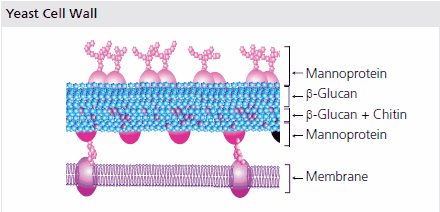
The Candida's cell wall is what makes it a tough enemy to beat. β-glucan forms a fibrous network visible by scanning electron microscopy of the inner surface of walls and forms amorphous components (without any clear shape, form or structure) as well. Chitin is essential for insolubility of the wall, and the mannoproteins are highly glycosylated polypeptides, often 50 to 95% carbohydrate. They add to the cell wall integrity and non-permeability. 

Fungal adhesion to the mucus membranes in our body is a prerequisite for colonization, and infections are characterized by the invasion of surrounding epithelial cells. Although candida infections are usually seen in immunocompromised patients, recent studies have shown that even individuals with functioning immune systems can have their chronic health problems traced back to these opportunistic organisms. 
There is a need for everyone to be made aware of this hidden enemy that could just be the grass root level cause of the many modern health problems we have today.


Source:

Saturday, May 18, 2013

Candida Overgrowth and YOU

Candida Overgrowth and YOU

Today's modern health problems are a complex group of signs and symptoms that usually will not have a specific causative factor identified. Modern medicine has been geared to only to relieving symptoms associated with the health problems and/or bombarding the body with synthetic chemicals to combat what might be thought to be the causative factor of a disease or disorder.

One condition that is slowly being accepted into today's medical community, is the fact that the body's normal flora (normal community of microorganisms) could become imbalanced and cause a variety of problems that many experience today. There's growing research in the medical community on the importance of gut flora and intestinal fungi.

Candida albicans is a microorganism classified as a fungus, but is commonly referred to as yeast. Fungi thrive in dark, warm and moist environment. Candida as part of our "normal flora" co-exist with approximately 300 trillion other microorganisms in the body. 

Candida is normally found in the nose, throat, mouth, genitourinary system and gastrointestinal system and  generally causes no problems. However, it is an opportunistic organism that will rapidly proliferate and colonize in many tissues of the body given the slightest opportunity. This overgrowth occurs when the immune system is weakened, or the balance between the normal flora in the gut (good bacteria) and yeast is upset.

The Hidden Infection

There are a number of causes identified for the overgrowth of Candida in the body.
Candida overgrowth may occur if any of the conditions listed below are present.

  1. Widespread use of antibiotics including medications from prescription drugs for chronic infections to consumption of antibiotic-treated foods (meat, dairy, poultry and eggs).
  2. High cortisol or other steroid levels from stress, prescription drugs, prolonged illness and malnutrition.
  3. High estrogen levels from pregnancy, birth control pills, estrogen replacement therapy and obesity.
  4. Diets high in carbohydrates, refined sugar, yeast or yeast products, molds, fermented foods, excessive juices and diabetes.

Candida, in the yeast form, reproduces by "budding", and is usually non-invasive at this stage. However, in the mycelia or fungal stage, it forms long, "rootlike" structures that can penetrate the mucus membranes.

Candidatoxins can be released and may be responsible for a myriad of symptoms. It is also thought that yeast overgrowth in the intestine may lead to a "leaky gut" syndrome. This condition leads to the lining of the intestine to allow large molecules of food to enter the blood.

Generally, Candidiasis is seen more often in women and with more side effects, but it may occur both in men and women. The signs and symptoms of Candida overgrowth are many and may masquerade as almost any chronic illness.

It's an unfortunate truth that millions of people across the world suffer from seemingly unexplainable and unpleasant symptoms like chronic tiredness, recurring yeast infections and digestive issues. 

Yeast vaginitis (itching, burning and discharge), menstrual complaints, prostatitis, impotence, bladder infections, abdominal pain, belching, bloating, heartburn, constipation, diarrhea, rectal itching or irritation, nasal itching, congestion, asthma, headache, earache, “thrush” or oral Candidasis, severe depression, fatigue, confusion, extreme irritability and inability to concentrate are just some of the signs and symptoms of yeast overgrowth.

Taking care of the problem


"Candidiasis has been around for decades, ever since we began to use antibiotics but neglected to replace the good bacteria that are destroyed along with the bad." (Carolyn Dean, M.D., N.D.)
Once the good bacteria in our gut are wiped out, there are several things patients can do to restore bacterial dominance in the intestinal tract. First off, it's usually necessary to make certain dietary changes. That means following a healthy, low-glycemic diet plan that doesn't nourish Candida and other pathogens in the body. Green vegetables, low-glycemic fruits, seeds, nuts, and high-quality organic animal proteins all work for a Candida-fighting diet.


Keeping the good bacteria in our digestive tract healthy and thriving is the key to keeping candida from growing out of control. Avoiding refined foods, sugar, harmful chemicals, and prescription medications is a good place to start. As for antibiotics, they should only be taken when truly necessary and always followed up with a high-quality probiotic supplement.


Sources:
 

http://orthomolecular.org/library/jom/1999/articles/1999-v14n04-p198.shtml

http://www.naturalnews.com/036285_Candida_disease_intestinal_health.html

http://www.naturalnews.com/033066_Candida_diagnosis.html
Related Posts Plugin for WordPress, Blogger...

Popular Posts